
SUBSURFACE
Geology, hydrogeology and reservoir modelling
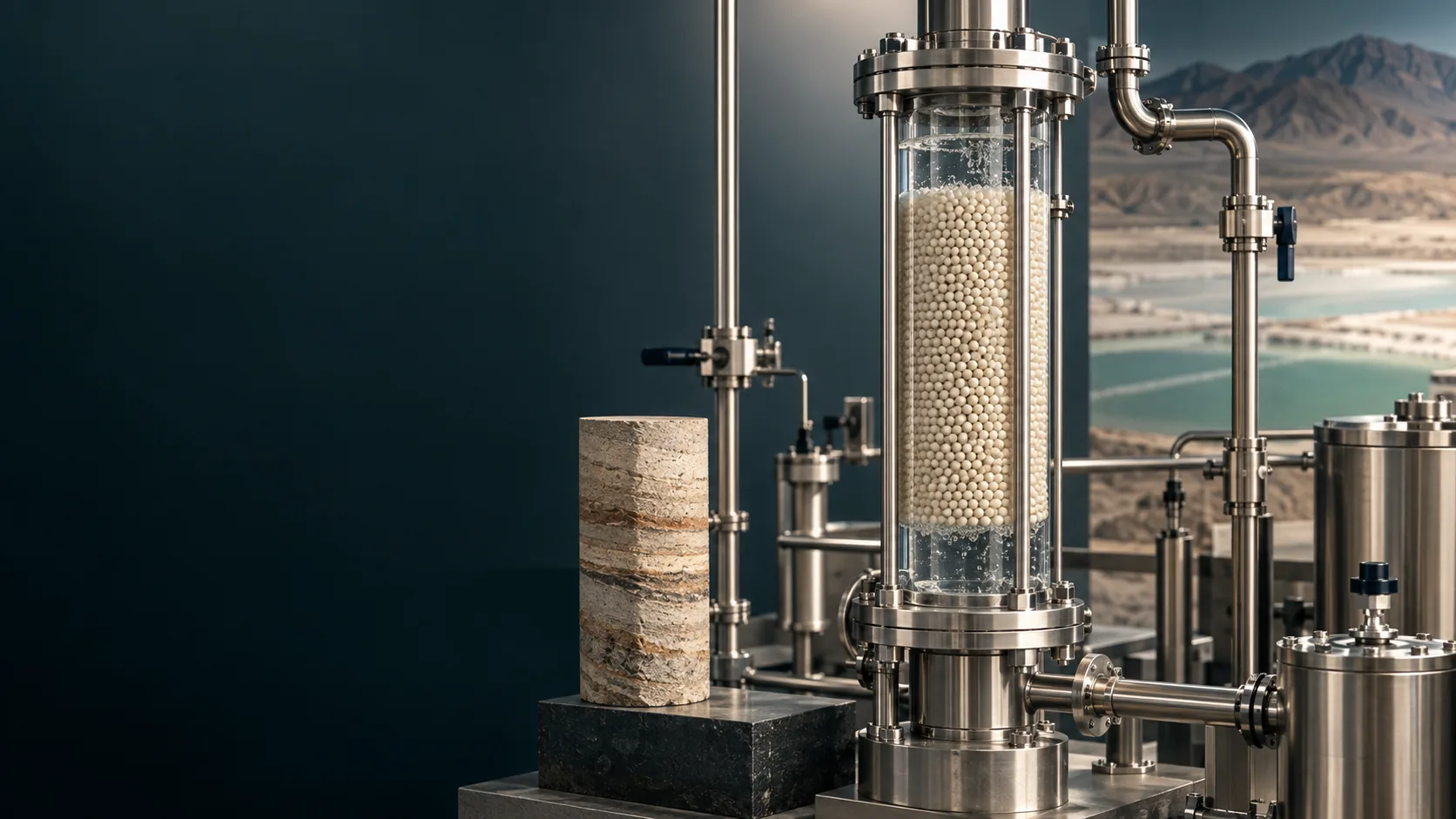
DLE is a family of processes that separate lithium from other brine constituents. Extraction is followed by purification, concentration and conversion into the final product.
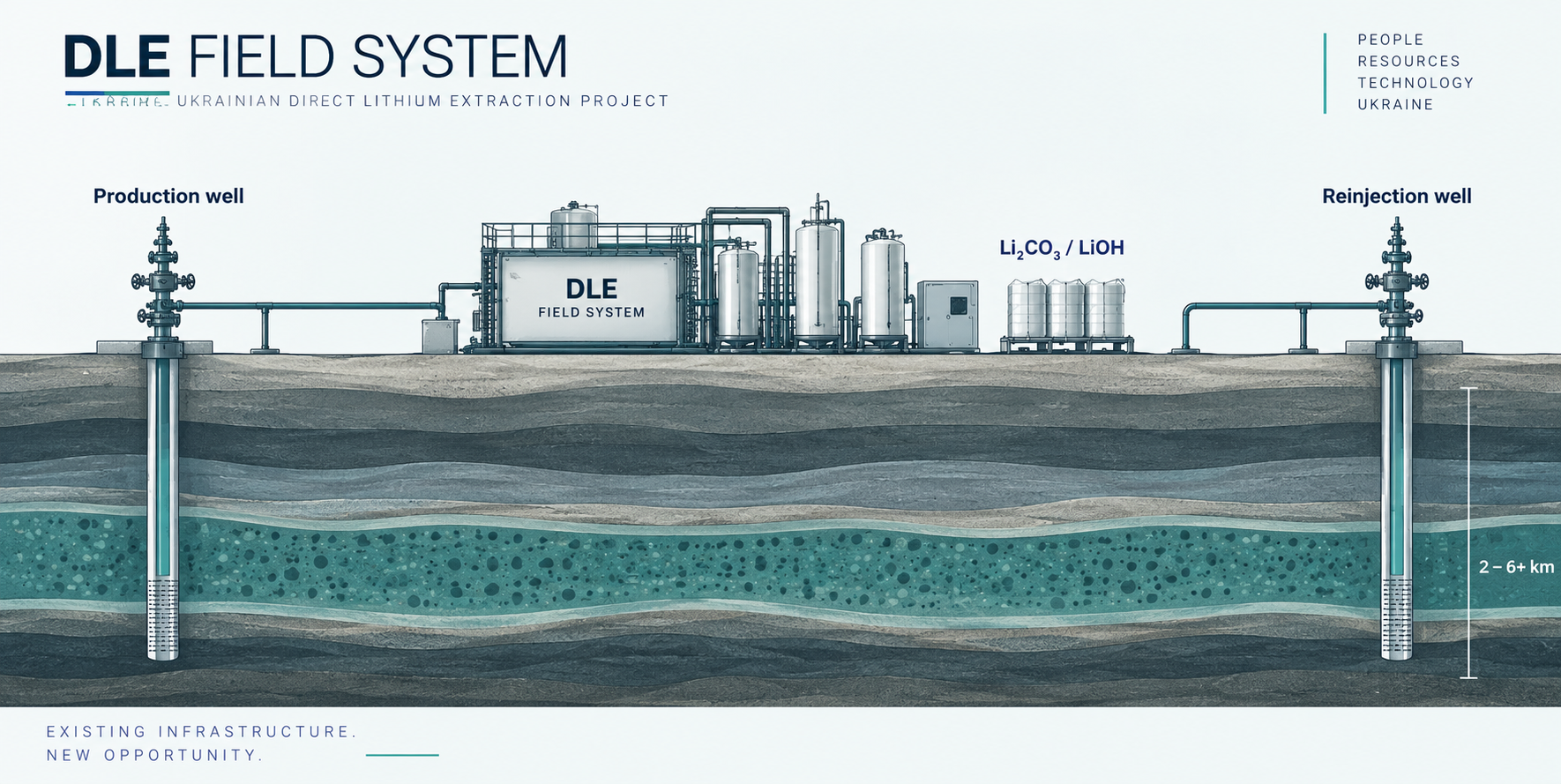
An integrated cycle: brine production → direct lithium extraction → brine reinjection into the formation
Geological and hydrogeological assessment helps identify a prospective formation, reservoir characteristics, formation-fluid parameters and the potential of lithium-rich brines.
Representative formation-fluid samples are collected and analysed for lithium concentration, total dissolved solids, associated constituents and other parameters needed to select a suitable DLE solution.
Lithium-rich formation brine reaches the surface through a production well and a fluid lifting and transport system.
At the surface, brine passes through a DLE module. The process selectively extracts lithium from the brine stream.
Following the DLE stage, treated brine is directed to the reinjection system.
Treated brine may return through an injection well to a designated formation, subject to verified compatibility, engineering suitability and the required permits.
Recovered lithium undergoes further purification and product conversion; treated brine follows a separate stream to reinjection. Brine–formation compatibility, water balance and injection parameters require site-specific verification.
DLE Field System applies oil and gas expertise — geological modelling, well testing, formation sampling, reservoir-fluid handling, well technologies and surface infrastructure — to the direct lithium extraction value chain in Ukraine.
Geology, hydrogeology and reservoir modelling
Formation-brine sampling and laboratory analysis
Wells, fluid lifting and transport
Integration of surface extraction technology and the reinjection system
The diagram maps DLE technology pathways and development stages. The highlighted DLE Field System area shows our current focus: research, development, testing and pilot design.
Lithium and competing ions, salinity, temperature and impurities affect pretreatment, selectivity, reagent demand and depleted-brine handling. No specific technology selection has been announced for DLE Field System.
Selective capture using a sorbent.
Ion exchange with an active material.
Transfer of lithium between liquid phases.
Electrical potential and selective barriers; maturity is process-specific.
A research pathway illustrated in team materials. Potential advantages require brine-specific testing and scale validation; the image does not imply that the project owns or operates this equipment.
Industrial deployment depends on process stability, product quality, water balance, reinjection and permitting. This is a validation pathway, not a list of stages completed by DLE Field System.
Time labels in the graphic refer to different stages: mine development, evaporation and a DLE pilot. They are not directly comparable times to saleable product.
DLE may offer a smaller surface footprint and greater compatibility with existing subsurface infrastructure, subject to brine chemistry and process design.